
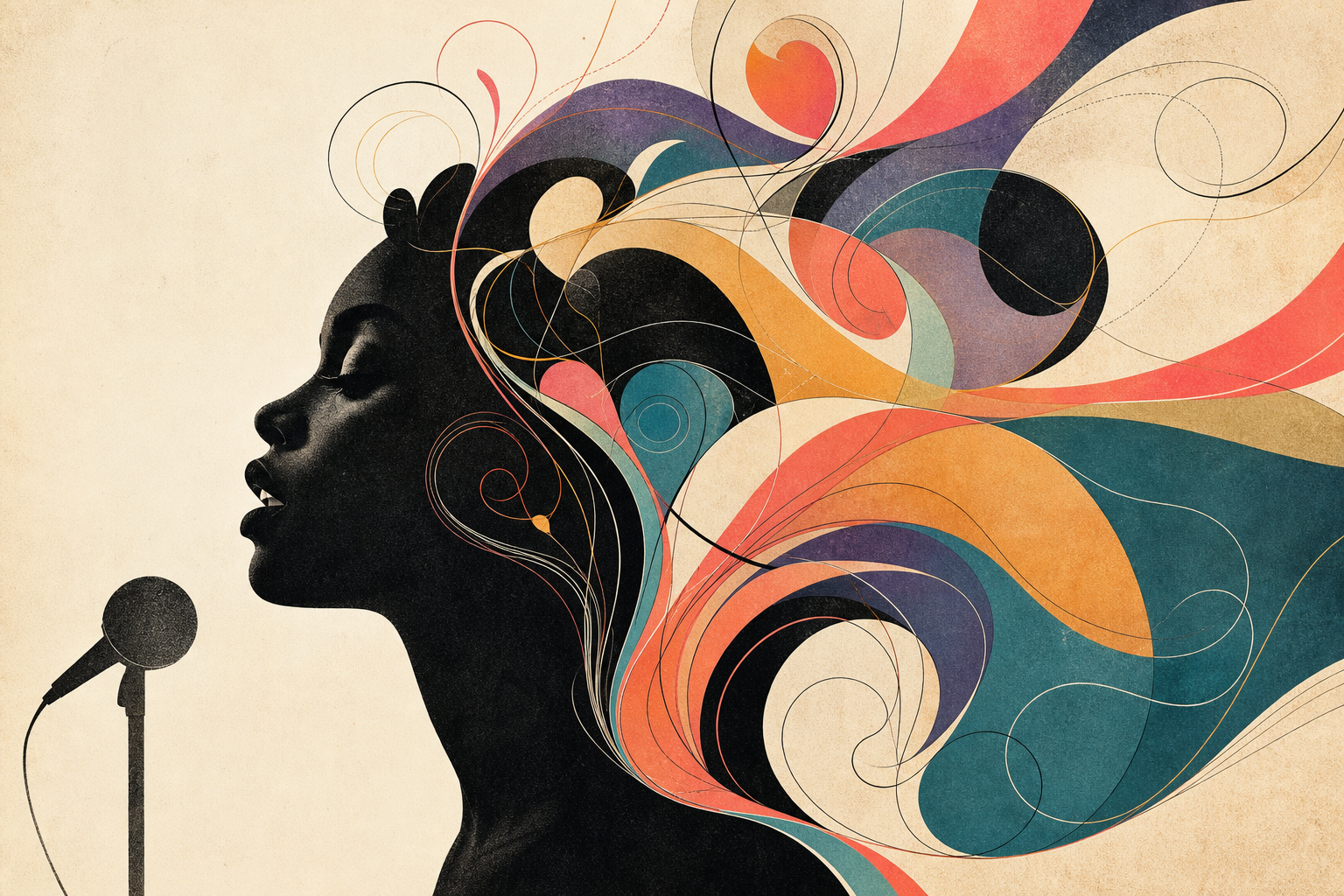
Milton Glaser’s Dylan is one of those music posters that long ago outgrew its original occasion. MoMA lists the work as a 1966 offset lithograph measuring 83.8 × 55.8 cm. The Victoria and Albert Museum describes the same object as a 1966 poster from the USA: a left-facing silhouette portrait of Bob Dylan with a stylized full-color hair pattern.
How the poster entered circulation
The origin is unusually well documented. According to MoMA, the poster was created as a special insert for Bob Dylan’s Greatest Hits after Dylan suffered serious injuries in a 1966 motorcycle accident and rumors circulated about his condition. Centre Pompidou identifies John Berg, art director at Columbia Records, as the commissioner. So this was not first conceived as a gallery print, but as a mass-circulation printed object tied to a record release.
Why the image still hits so hard
MoMA notes that Glaser took inspiration for the profile from a 1957 self-portrait by Marcel Duchamp. The colored, swirling hair then stands out in sharp contrast against the white ground and taps into the visual language of 1960s counterculture. Smithsonian Magazine adds another relevant clue from Glaser himself: Art Nouveau influenced the colors and shapes. That combination of hard silhouette and ornamental excess is what keeps Dylan instantly legible.
From album insert to design icon
Centre Pompidou notes that the poster was folded into every copy of Bob Dylan’s Greatest Hits and that the album sold more than six million copies. The image therefore spread through the ordinary music market rather than a small collector niche. Smithsonian Magazine also points out that original copies can often be identified by their fold marks, a useful reminder that the poster began life as a handled, circulated print object.
Why it fits Reetro
For Reetro, Dylan matters less because of fame than because of construction: a single profile, lots of open space, and color used as motion rather than decoration. If that kind of image logic appeals to you, it often leads to large-format posters or more quietly staged canvas prints where one motif can hold a room. The poster also shows how tightly pop culture and printed graphics interlocked in the 1960s.