
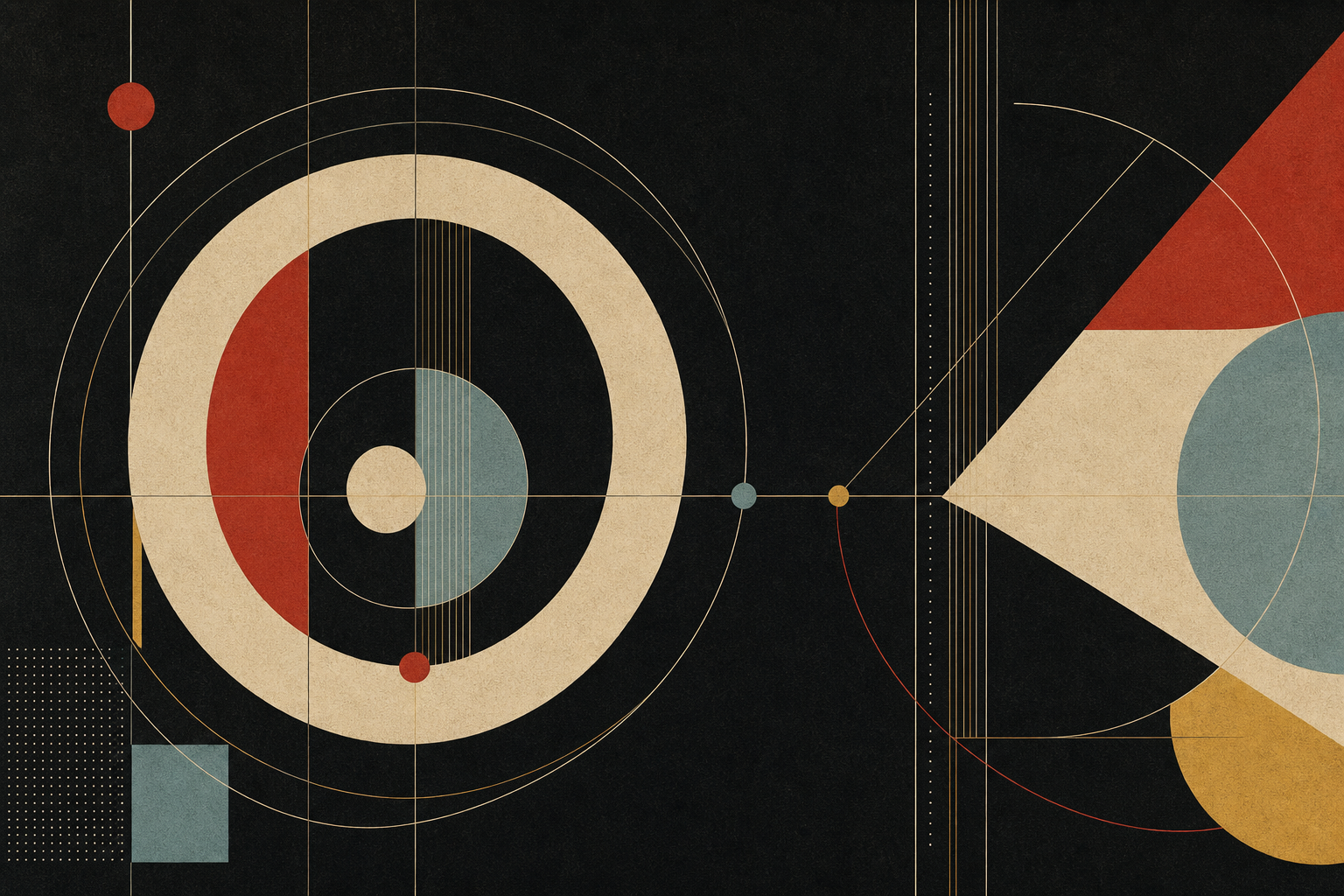
Josef Müller-Brockmann’s June Festival shows how sober a concert poster can be while still holding real presence. The Victoria and Albert Museum lists it as a poster made in Switzerland in 1956, designed by Josef Müller-Brockmann and printed by City-Druck AG in Zurich. The same V&A record also names the process: a colour offset lithograph on paper measuring 127.8 × 90.3 cm.
What the poster advertised
The V&A’s translation of the inscription makes the event very specific: the poster advertises a June Festival concert of the Tonhalle Society Zurich on Tuesday, 26 June 1956, conducted by Leopold Stokowski. It names Beethoven, Mozart, Leimer, and Ravel. That makes the sheet more than a generic music poster; it is a precisely dated piece of working print from Zurich’s concert culture of the 1950s.
Why it matters in design history
The V&A describes Müller-Brockmann’s signature style as one based on simple geometric grids, complementary or contrasting colours, and sans-serif typefaces. Museum für Gestaltung Zürich further places him among the pioneers of Swiss Style, a direction he helped shape in the 1950s and 1960s. That is why June Festival still reads so current: the poster is not trying to be decorative, it is trying to make order visible.
Why it fits Reetro
For Reetro, the appeal lies mainly in that clarity. If you like graphic strictness, reduced colour fields, and typographic calm, you usually end up with posters or large-format canvas prints that work through structure rather than nostalgia. MoMA’s artist page also shows how strongly concert and cultural posters run through Müller-Brockmann’s work of the 1950s, so June Festival sits inside a broader modernist poster world rather than standing alone.